Routine Inspections & Building Fabric
Maintaining a historic church building is entirely different from managing a modern commercial or residential property. Historic buildings were constructed using breathable materials—lime mortar, solid masonry walls, and natural timber—that rely on continuous evaporation to manage moisture. Our building maintenance services focus on preserving this delicate balance through regular, structured inspections.
Routine inspections are the bedrock of good stewardship. A minor issue, such as a blocked downpipe or a slipped slate, can introduce significant volumes of water into the building fabric over a single winter. If left unchecked, this moisture inevitably leads to mortar failure, timber decay, and interior plaster damage. We advocate for a systematic approach: visual checks conducted from ground level monthly, high-level inspections annually, and comprehensive fabric assessments every five years (often aligning with standard Quinquennial inspections).
Managing Moisture Issues
Water is the single greatest threat to a historic church building. Modern interventions, such as the inappropriate application of cement renders or the installation of impermeable membranes, often trap water within historic walls. When moisture cannot escape, the building suffers.
Our approach to moisture management involves identifying the source rather than just treating the symptom. We examine the entire rainwater disposal system, checking the capacity and condition of gutters, hoppers, and downpipes. We look at ground levels around the perimeter of the building; centuries of accumulated earth and modern paving often raise the ground level above the historic damp proof course or plinth, bridging the gap and allowing water to soak directly into the lower walls.
External Walls & Fenestration
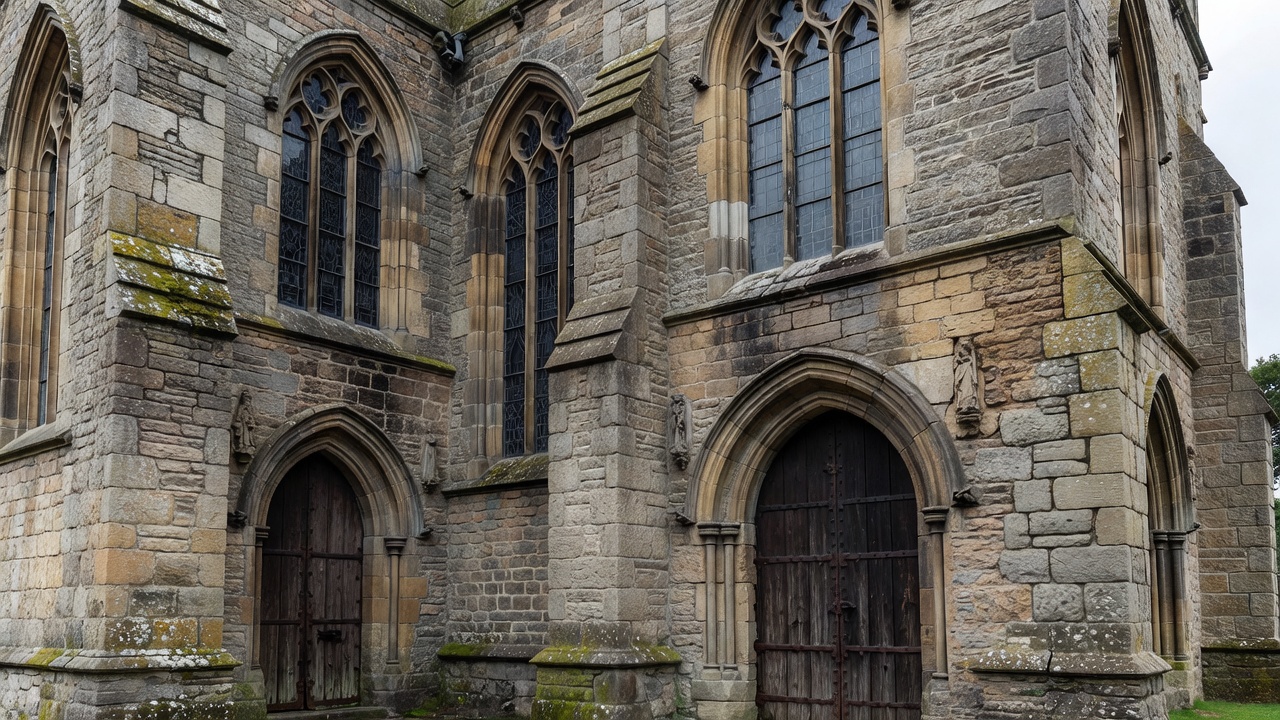
The external walls and fenestration (doors and windows) form the primary defensive envelope of the building. Maintaining these elements requires a careful eye and a gentle hand. We evaluate the condition of pointing, looking for areas where mortar has washed away or where inappropriate hard cement was historically applied.
Church windows—ranging from robust timber casements to delicate leaded lights and stained glass—require specialized monitoring. We inspect window surrounds for rust in iron armatures, which can expand and shatter surrounding stonework (a process known as rust jacking). Timber doors are assessed for rot, particularly at the vulnerable lower edges, and we ensure that heavy ironmongery remains functional and properly secured to prevent damage to the timber during use.
General Maintenance Planning
Maintenance should never be reactive. We assist parishes, trusts, and heritage custodians in developing realistic, phased maintenance plans. These plans break down required tasks into manageable, seasonal checklists. For example, clearing gutters after the autumn leaf fall, checking roof slopes for slipped tiles after winter gales, and monitoring vegetation growth on high masonry during the summer.
By shifting the focus from emergency repairs to planned, cyclical maintenance, custodians can drastically reduce long-term costs and prevent the loss of original historic fabric.
Seasonal Maintenance Checklist
- Spring: Clear all ground-level drains and inspect roof coverings following winter storms.
- Summer: Safely remove climbing vegetation (such as ivy) from external walls and clear parapet gutters.
- Autumn: Clear all gutters, hoppers, and downpipes immediately following the main leaf fall.
- Winter: Monitor the building during heavy rain to identify overflowing gutters or poor ground drainage.
What to Know
Before undertaking any maintenance work, it is critical to understand the legal and ecclesiastical protections applied to the building. Many churches are listed buildings or fall under strict faculty jurisdiction. While routine maintenance (like clearing a gutter) generally does not require permission, anything that alters the building's character, fabric, or appearance—such as replacing mortar, changing window glass, or removing significant historic material—likely requires formal consent. We can help guide you through the process of identifying what falls under standard maintenance and what requires specialized planning permission or faculty approval.