Understanding Historic Masonry
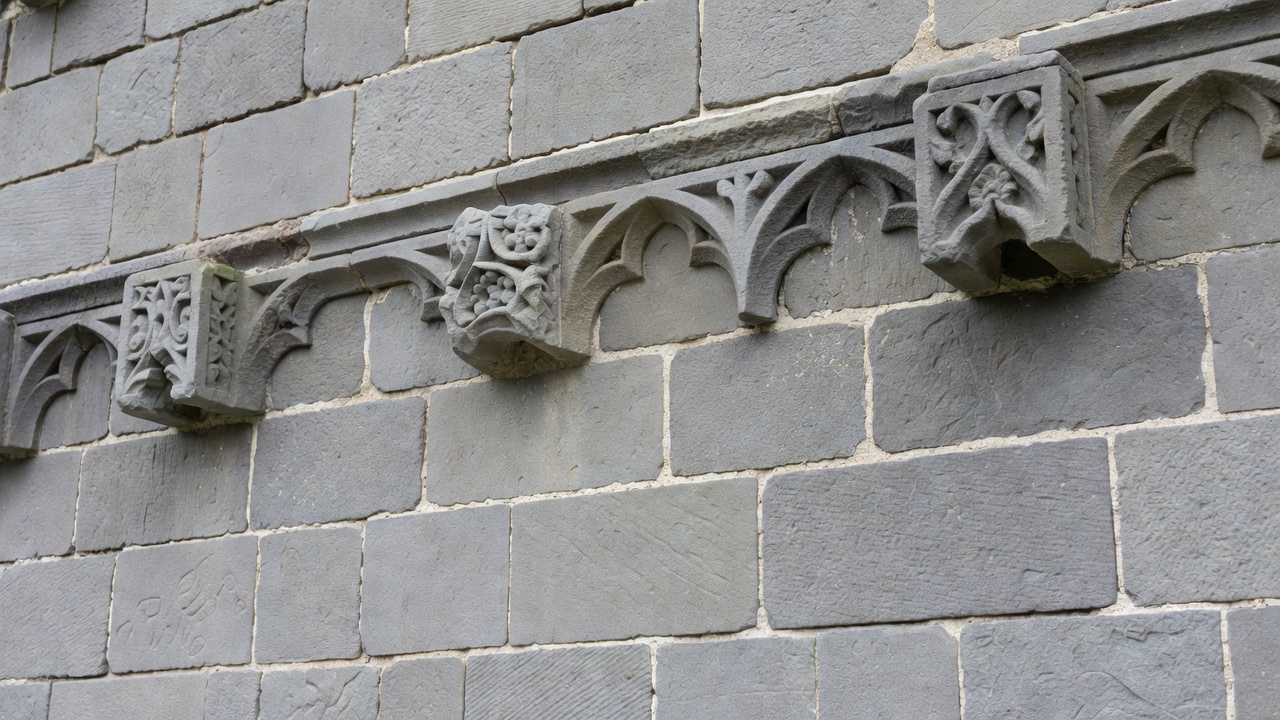
The visual character of most historic churches is defined by their stone. From towering ashlar limestone elevations to localized rubble masonry gathered from nearby fields, the variations are endless. Proper conservation begins with understanding the specific geological properties of the stone and how it was originally laid and dressed. Stone breathes, moves subtly with temperature variations, and interacts dynamically with moisture. Recognizing these traits is essential to preventing irreversible damage during repair.
Mortar Joints & Lime Pointing
The mortar joint is the sacrificial element in a traditional masonry wall. Its purpose is to weather away over the decades, absorbing the brunt of wind, rain, and freezing temperatures to protect the adjacent stone blocks. Historically, churches were built using lime-based mortars, which are soft, flexible, and highly vapour-permeable.
A major crisis in modern church conservation is the legacy of 20th-century repairs, where hard, impermeable Portland cement was used for repointing. Cement traps moisture within the wall. In freezing conditions, this trapped moisture expands, causing the face of the historic stone to spall (flake and shatter) while the hard cement joint remains entirely intact. Our planning focuses heavily on the careful, manual raking out of damaging cement mortars and specifying traditional, well-matched lime pointing to restore the building’s ability to "breathe."
Surface Deterioration & Water Ingress
Stone deterioration is rarely random. It is almost always a localized symptom of excessive water ingress. Common issues include:
- Salt Crystallization: Ground water or salts from inappropriate mortars travel through the stone, crystallizing on the surface as the water evaporates. This physical expansion causes a powdery decay on the stone face.
- Frost Damage: Saturated stonework is highly vulnerable to freeze-thaw cycles, leading to deep cracking and structural spalling.
- Delamination: Sedimentary stones laid "face-bedded" (with their natural geological layers parallel to the wall face rather than horizontal) will peel away in large sheets over time.
Addressing these issues requires a holistic look at the building. Replacing a damaged block of stone is pointless if the blocked hopper above it is still saturating the wall. We prioritize stopping the water source before commencing masonry repair.
Repair Planning & Conservation Considerations
The fundamental rule of masonry conservation is: Do as much as necessary, but as little as possible. The patina of age is a valuable characteristic of a historic church and should not be scrubbed away to create a uniform, "new" appearance.
When repair is necessary, we evaluate various approaches. Minor surface decay might simply be brushed and left alone if structurally sound. Deeper damage might require mortar repairs (using stone dust mixed with lime to form a protective aesthetic patch). Where a stone has failed completely and risks destabilizing the wall, piecing-in (indenting) a new, geologically matched stone block is planned. We emphasize documentation throughout this process, mapping the condition of the elevations to guide specialist stonemasons.
Good For:
- Reversing historic damage caused by cement mortars.
- Stabilizing crumbling tracery in stained-glass windows.
- Conserving delicate carvings and gargoyles.
- Ensuring structural integrity of parapets and towers.